

Summit Shield Roofing
Storm Roof Damage in Central Mississippi
Storm damage doesn't automatically mean roof replacement — and it isn't always visible from the ground. We inspect, document the condition, and explain whether your roof appears repairable or whether broader damage exists.
✓ Same or next-day storm inspections available.
Not sure what you're looking at? Start with a roof inspection.
Start Here
Storm damage does not automatically mean a new roof
After a severe storm, it's easy to assume the worst. But storm damage takes many forms — a few blown-off shingles, a section of lifted flashing, hail granule loss, or a tree limb impact — and most of it is repairable. The question isn't whether the roof was damaged; it's how much, what kind, and whether the rest of the roof is still sound.
We get on the roof, document the condition with photos, and give you a straight answer: is this a repair, or is the damage widespread enough to justify replacement? We don't push replacement when repair will solve it, and we don't minimize damage that needs more than a patch.
What a storm inspection gives you
First Steps
What to Do After a Severe Storm
A few quick steps can limit the damage and give you the documentation you need.
Stay Safe First
Don't climb on the roof — especially if it's wet, windy, or has debris. If a limb is on the roof, the structure may be compromised.
Contain Any Leaks
If water is coming in, place a bucket and move belongings. A small hole in a ceiling stain can let water drain instead of spread.
Document From the Ground
Take photos of any visible damage, shingles in the yard, and ceiling stains. Note the date and what the storm was.
Schedule an Inspection
Call a roofing contractor to get on the roof and document the full scope of damage before you decide on repair, replacement, or a claim.
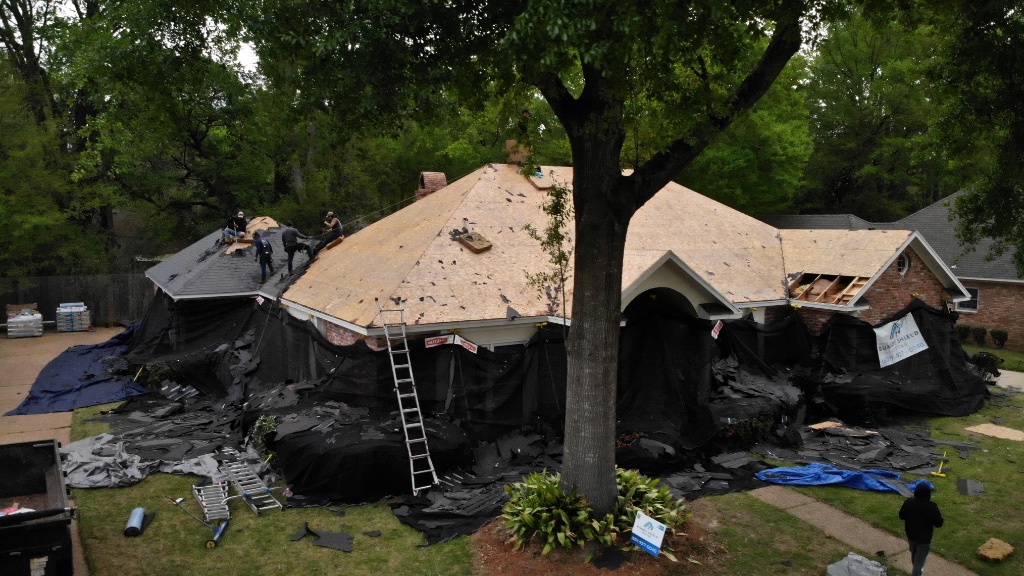
Wind Damage
Visible Signs of Wind Damage
Shingles damaged by wind are one of the most common storm-related problems we see across the Jackson metro. Wind damage isn't always obvious from the ground — here's what to look for and what we check when we get on the roof.
Lifted or Creased Shingles
Shingles lifted at the edge or creased horizontally. The seal has broken — the next storm may take them off.
Missing Shingles
Shingles blown off entirely, exposing the underlayment. The most obvious sign, but not the only one.
Shifted or Slid Shingles
Shingles that have moved out of place or slid down the roof. A sign the fasteners or seal have failed.
Damaged Ridge & Hip
Ridge and hip cap shingles take the most wind and are usually the first to fail in a storm.
Shingles actually blew off? See our missing shingles guide →
Hail Damage
Hail Damage Indicators
Hail damage is harder to spot from the ground. These are the signs we look for during an inspection.
Dents or Pockmarks
Small dents in the shingle surface where hailstones impacted. Often visible up close, not from the ground.
Granule Loss
Dark spots where granules have been knocked off, exposing the mat beneath. Check gutters for granule piles.
Dented Metal
Dents in metal flashing, vent covers, or skylight frames — a strong indicator of hail size and impact.
Cracked Mat
Hail can crack the shingle mat beneath the granules, weakening the shingle even if the surface looks minor.
The Hidden Problem
Why Storm Damage May Not Be Obvious From the Ground
Most homeowners check for storm damage by looking up at the roof from the yard. That catches the obvious — missing shingles, a tree limb, a big gap. But it misses a lot. Wind can lift and crease shingles without blowing them off. Hail can crack the shingle mat and knock off granules in a pattern you can't see from below. Flashing can be lifted or displaced just enough to let water in without being visible from the ground.
The only way to know the full scope of storm damage is to get on the roof, inspect the shingles up close, check the flashing and penetrations, and look in the attic for signs of water entry. That's what a storm inspection is for — to find the damage you can't see, not just confirm the damage you already noticed.
What you can't see from the ground
Tree & Branch Impact
Tree Impact
Tree and Branch Impact
A fallen limb is one of the most obvious signs of storm damage — but the visible damage is often only part of the story. A branch can crush shingles and crack the deck beneath, displace flashing as it slides off, or leave granule damage across a wider area than the impact point itself.
If a limb is on your roof, don't try to remove it yourself if it's large or if the roof structure may be compromised. Have the roof inspected to assess both the visible damage and anything beneath the surface. Tree damage is often covered by insurance, but the cause and your policy terms determine what applies.
Insurance Claims ProcessLeaks After Storms
Leaks After a Storm? Don't Wait.
A leak after a storm means water has already made it through. The sooner the source is found and documented, the less damage it can do.
Storm Hits
Wind, hail, or debris damages the roof — often in ways you can't see from the ground.
Water Gets In
The damaged area lets water through the shingles and underlayment to the deck below.
Stain Appears
Water travels through the deck and shows up as a ceiling stain or drip — often far from the actual damage.
Inspect & Document
We find the source, document the cause, and help you understand whether it's a repair, a replacement, or a claim.
Water on your ceiling after a storm? See our roof leak guide →
Real Storm Damage
What Storm Damage Actually Looks Like
Real conditions we've documented on roofs across the Jackson metro — the kind of damage you'd never see from the ground.
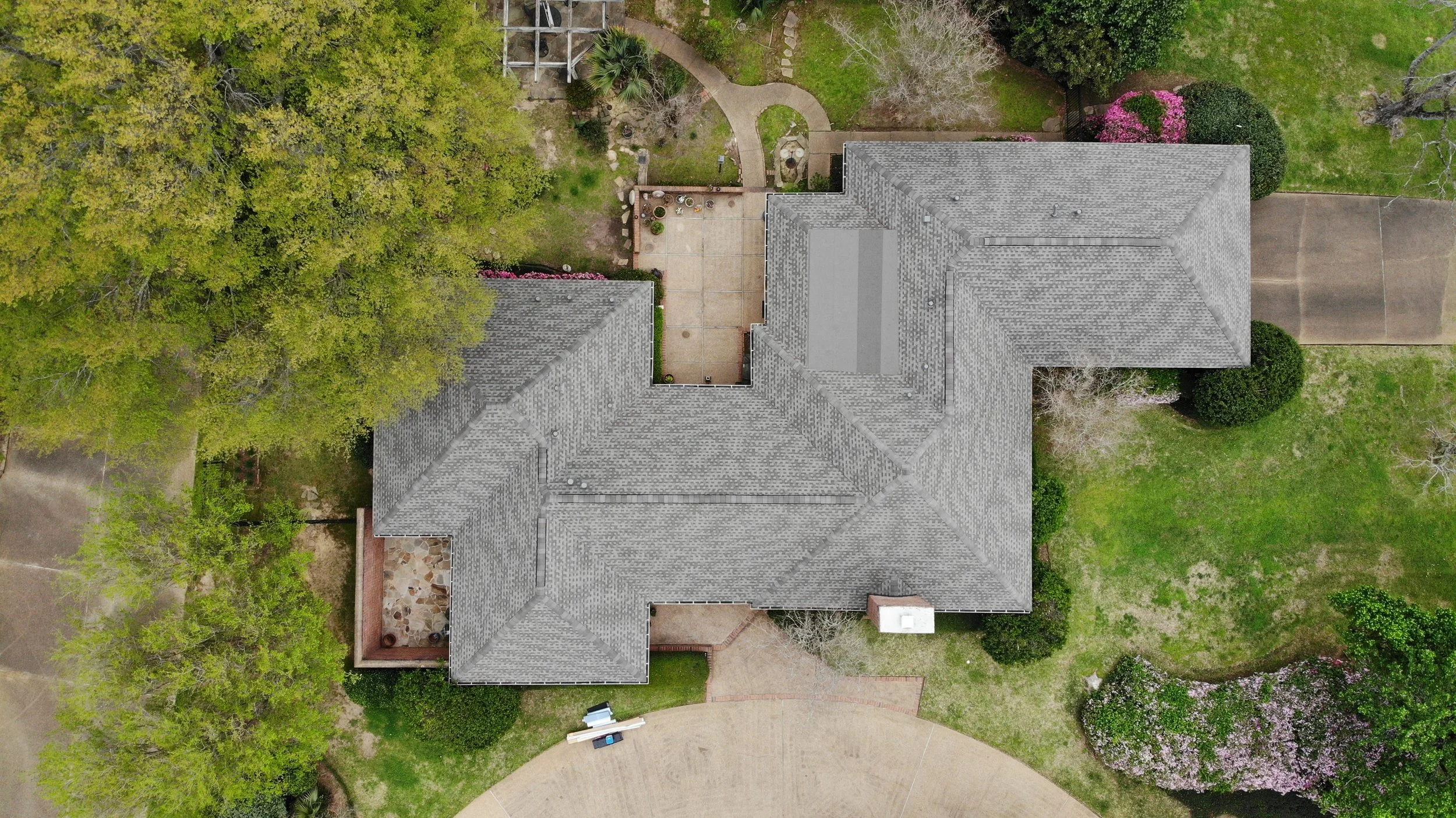
Storm damage across the Jackson metro — severe weather is a leading cause of roof damage in Mississippi.
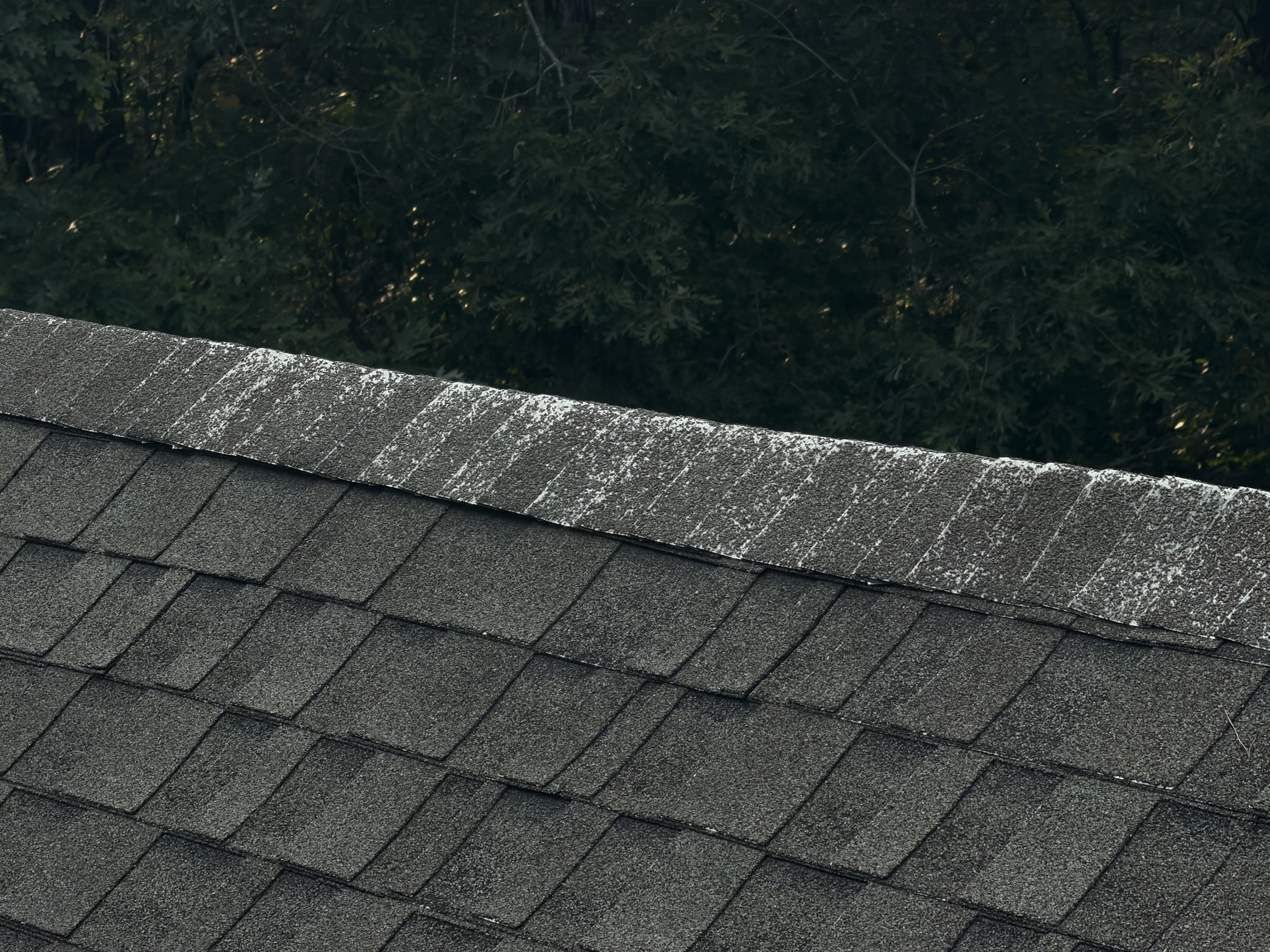
Granule loss on ridge caps — a sign of aging and hail impact that weakens shingles against the next storm.
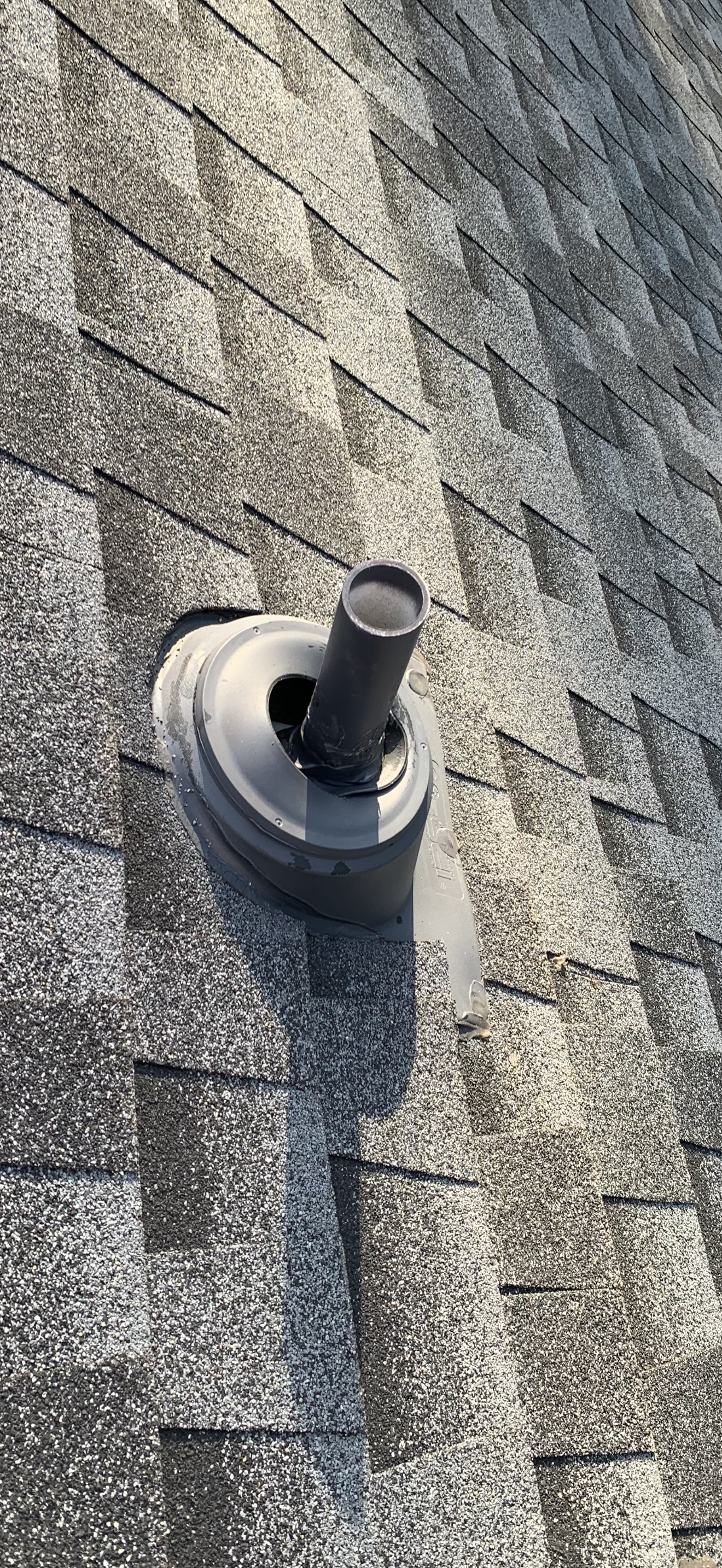
A cracked vent boot — storms can accelerate the failure of components that were already wearing out.
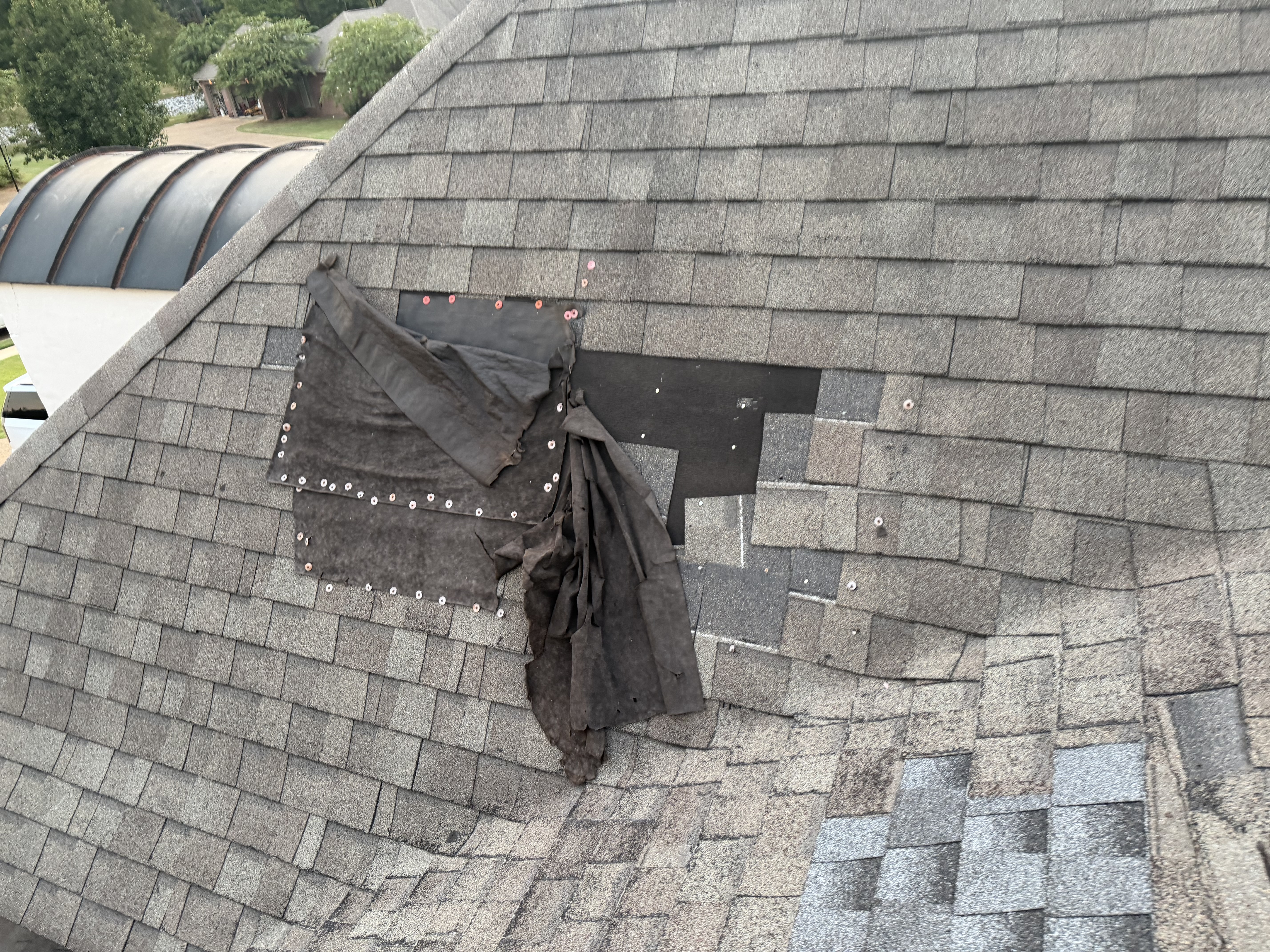
A failed patch exposed by wind — storm damage often reveals weaknesses from previous improper repairs.
Repair vs. Replace
Repair or Replacement After Storm Damage?
Storm damage is usually repairable. If a storm blew off shingles in one area, lifted a section of flashing, or caused isolated hail damage, we can repair the affected area and seal it properly — without replacing the whole roof. That's the right call when the rest of the roof is still in good condition.
Replacement becomes the better option when the damage is widespread — hail across the entire surface, wind damage in multiple areas, or a roof that was already near the end of its life before the storm. We inspect first and give you an honest recommendation based on what we actually find, not a one-size-fits-all answer.
What usually means repair
What may mean replacement
Our Process
What Happens During a Storm Inspection
We don't just look at the obvious — we inspect the full roof and document everything we find.
We Get on the Roof
We inspect the entire roof surface — shingles, flashing, vents, valleys, and penetrations — not just the area you noticed.
We Check the Attic
We look for water trails, wet insulation, and daylight — signs that water has already gotten in where it shouldn't.
We Photograph Everything
We document all damage — wind, hail, impact, and any exposed areas — with photos you can keep and use.
We Explain & Recommend
We sit down with you, show you the photos, and give you an honest repair-or-replace recommendation based on what we found.
Documentation
Why Documentation Matters
After a storm, documentation is everything. If you decide to file an insurance claim, the adjuster will want to see what happened and where. If you decide not to file, you still want a record of the damage and the repair. And if more damage shows up later, you want to be able to show what the storm did and what was already there.
We photograph every piece of damage we find — wind, hail, impact, and any exposed or vulnerable areas. You get those photos. If you file a claim, they support what you're claiming. If you don't, they're your record of the storm's impact and what was done about it.
What we document
Insurance Considerations
When Insurance May Become Relevant
Storm damage — wind, hail, and fallen debris — is often the type of loss that homeowners insurance is designed to cover. But every policy is different, and we can't promise any particular coverage, approval, or settlement. Whether a claim makes sense depends on the extent of the damage, your deductible, and your policy terms.
We recommend having the roof inspected and documented before you decide whether to file. We provide the photos and documentation that can support a claim, and we can meet your adjuster on-site to walk through what we found. The decision to file and the outcome are between you and your insurance company — our job is to make sure you know what's on your roof before you decide.
Want to understand how roof insurance claims work before you decide? Read our roof insurance claim guide.
Questions & Answers
Storm Damage FAQ
Real questions from homeowners across Flowood, Jackson, and Rankin County.
How can I tell if my roof has storm damage?
From the ground, look for missing or lifted shingles, shingles in the yard, dented or creased shingle edges, damaged flashing around vents and chimneys, and any tree limbs or debris on the roof. Inside, check the attic and ceilings for new water stains. But not all storm damage is visible from the ground — wind can lift and crease shingles without blowing them off, and hail can crack shingles or knock off granules in ways you can't see from below. A proper inspection means getting on the roof.
What does wind damage look like on shingles?
Wind damage shows up as shingles that are lifted, creased horizontally, curled at the edges, or missing entirely. You may also see shingles that have slid down or shifted out of place. The adhesive seal between shingles can break without the shingle blowing off — it just lifts in the wind and settles back, leaving a crease. Ridge and hip shingles are usually the first to go because they take the most wind.
What does hail damage look like on a roof?
Hail damage appears as small dents or pockmarks in the shingles, often with granules knocked loose. On asphalt shingles, look for dark spots where the granules have been removed and the underlying mat is exposed. You may also find granules piled up in gutters or under downspouts after a hailstorm. Hail can also dent metal flashing, vent covers, and skylight frames — those dents are a good indicator of what the shingles absorbed.
Should I inspect my roof after every storm?
Not after every storm, but after any storm with high winds, hail, or falling debris. A quick ground-level check — looking for shingles in the yard, checking gutters for granule buildup, and scanning the ceiling inside for new stains — takes a few minutes. If you see anything unusual, or if the storm was severe, schedule a professional inspection. It's far cheaper to catch damage early than to deal with a leak later.
What should I do immediately after storm damage to my roof?
First, stay safe — don't climb on the roof, especially if it's wet, windy, or has debris on it. If there's an active leak, contain it with a bucket and move belongings out of the way. Take photos of any visible damage from the ground and of any shingles or debris that came down. Then call a roofing contractor to inspect the roof before you decide whether to repair, replace, or file an insurance claim. Documenting the damage early helps with any insurance process.
Can storm damage be repaired, or do I need a new roof?
It depends on the extent and type of damage. If a storm blew off a few shingles or damaged a section of flashing but the rest of the roof is sound, a targeted repair is usually the right answer. If the roof is older, if hail damage is widespread across the surface, or if wind damage affected a large area, replacement may make more sense. We inspect first and recommend repair when repair is the right call — and replacement only when it's genuinely justified.
Does insurance cover storm roof damage?
Storm damage — wind, hail, and fallen debris — is often covered by homeowners insurance, but every policy is different and we can't promise any particular outcome. Whether a claim makes sense depends on the extent of the damage, your deductible, and your policy terms. We recommend having the roof inspected and documented before you decide whether to file. We provide photos and documentation that can support a claim, but the decision to file and the outcome are between you and your insurance company.
What if a tree branch damaged my roof?
Tree impact can cause visible damage — punctures, crushed shingles, broken decking — or hidden damage like cracked framing or displaced flashing. If a limb has fallen on your roof, don't try to remove it yourself if it's large or if the roof structure may be compromised. Have the roof inspected to assess both the visible damage and anything beneath the surface. Tree damage is often covered by insurance, but the cause and your policy terms determine what applies.
How soon should I have my roof inspected after a storm?
As soon as it's safe — ideally within a few days. Wind and hail damage can be subtle, and the longer exposed underlayment or damaged flashing sits, the more likely water is to get in. Even if you don't see obvious damage from the ground, a storm with high winds or hail is worth a professional inspection. We schedule storm inspections same or next day after severe weather moves through the Jackson metro.
What kind of documentation do I need for a storm damage roof claim?
Your insurance adjuster will want to see what happened, where, and how bad it is — close-up photos of wind-lifted and creased shingles, hail dents and granule loss, any impact points, and displaced flashing, plus photos showing the overall roof condition. We provide all of this as part of our storm inspection. If you're considering a claim, we walk you through what we found and what your adjuster will likely need to see.
Reviews
What Homeowners Say
"Absolutely blown away by the experience I had with this roofing company! Wyatt and Sam were incredible from start to finish. They helped me get a brand new roof at a very, very, very low cost — way more affordable than I ever expected. They were professional, honest, and made the whole process stress-free. The crew showed up on time, worked quickly, and left everything spotless. 10/10 service."
Clayton Ross
Jackson, MS
"We had storm damage and I knew it but I dreaded going through the insurance process but Wyatt handled all that and then some. Highly recommended two thumbs up!"
Jamie Kincade
Flowood, MS
"Great customer service, and excellent work. Mr. Wyatt made sure that all the details of the work are taken care of in the best way. He is very accessible, always available to answer any questions and tireless effort with the insurance company following up on the claim. Highly recommend."
Ashraf A
Madison, MS
After the Storm
Don't Guess. Get It Inspected.
Storm damage isn't always visible from the ground, and it doesn't always mean a new roof. We'll get on the roof, document everything with photos, and give you an honest answer about what your roof needs. No pressure, no upsell.
Not sure if you need a repair or a full replacement? Read our "Do I Need a New Roof?" guide.