

Summit Shield Roofing
Missing or Blown-Off Shingles in Central Mississippi
A few missing shingles don't automatically mean you need a new roof. We inspect how many are affected, check the condition of the surrounding roof, and recommend repair when repair is the right answer.
✓ Most missing-shingle problems are repairable.
Not sure if it's just shingles or something bigger? Start with a roof inspection.
Start Here
Missing shingles do not mean you need a new roof
Finding a shingle in your yard after a storm is alarming, but it doesn't automatically mean your roof has failed. Shingles can blow off for a specific reason — a severe wind event, a section that wasn't sealed properly during installation, or a single defective shingle — while the rest of the roof is still in good shape.
The right next step is an inspection. We look at how many shingles are affected, the condition of the shingles around them, whether there's wider wind damage, and the overall age and condition of the roof. Then we recommend the appropriate repair — or replacement only when it's genuinely justified.
What a shingle inspection gives you
First Steps
What to Do When You Notice a Missing Shingle
A few quick steps can limit the risk while you wait for an inspection.
Stay Off the Roof
Don't climb up during or right after a storm. A roof that's missing shingles is more slippery and more dangerous than usual.
Document From the Ground
If you can see the area safely, take a photo. Note where any shingles in the yard came from — it points to the area to inspect.
Check the Attic
If you can safely access the attic, look for any signs of water or daylight near the area above the missing shingle.
Schedule an Inspection
The sooner the exposed area is assessed and repaired, the lower the chance of water reaching the deck and leaking inside.
Repair vs. Replace
Can One or Several Missing Shingles Be Repaired?
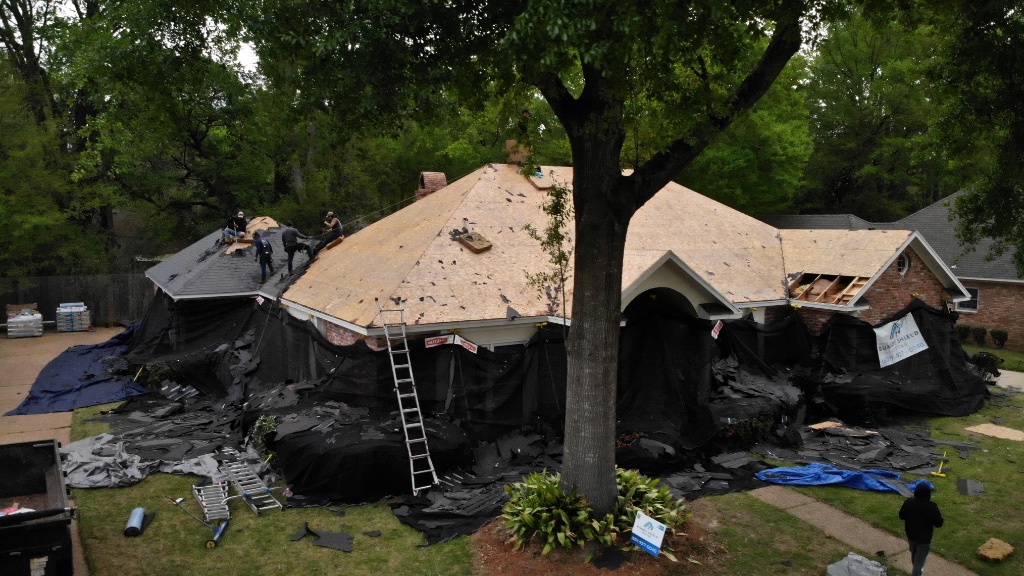
Yes — in most cases, missing shingles are a repairable problem. If the rest of the roof is in good condition, we replace the affected shingles, match the existing style as closely as possible, and seal the repair so it holds. A few missing shingles from a storm or a bad section of install is an isolated problem with a targeted fix.
Replacement becomes the better option when the roof is near the end of its useful life, when shingles are brittle and won't seal to a repair, or when the damage is widespread across the roof. We inspect first and recommend repair when repair is the right answer — and replacement only when it's genuinely justified.
What usually means repair
What may mean replacement
Common reasons shingles blow off
Why It Happens
Why Do Shingles Blow Off a Roof?
Shingles are designed to seal to each other with an adhesive strip activated by warm weather. When that seal is strong, the shingles act as a single, connected surface. When the seal fails — from age, improper installation, or a storm strong enough to break it — individual shingles become vulnerable to wind lifting them up and off.
Central Mississippi sees regular severe thunderstorms and straight-line wind events that can exceed the wind rating of many shingles. After a storm, it's common to find a few shingles on the ground even on a roof that's otherwise in good shape. The question is whether the loss is an isolated event or a sign of a broader problem — and that's what an inspection answers.
The Risk
How Missing Shingles Can Lead to Leaks
A missing shingle doesn't cause a leak instantly — but the clock starts the moment the underlayment is exposed.
Shingle Blows Off
A shingle is lost to wind or damage, exposing the underlayment beneath it to sun and rain.
Underlayment Degrades
The underlayment is a backup layer, not a permanent roof surface. UV exposure and repeated rain break it down over time.
Water Reaches the Deck
Once the underlayment fails, water reaches the wood deck below and begins to soak in.
Leak Appears Inside
Water travels through the deck and into the home, showing up as a ceiling stain or drip — often far from the missing shingle.
Already seeing water inside? See our roof leak guide →
Look Beyond the Obvious
Signs There May Be Additional Wind Damage
Missing shingles are the most visible sign of wind damage, but wind-damaged shingles often show more subtle signs you can't see from the ground. Here's what an inspection looks for.
Lifted or Creased Shingles
Shingles that haven't blown off yet but are lifted at the edge or creased horizontally. These are shingles on their way out — the seal has broken and the next storm may take them.
Missing Granules in the Yard
A pile of granules under a downspout or in the gutter means shingles are degrading. Granule loss accelerates after wind events and shortens the life of the roof.
Exposed Underlayment
Any patch of black or felt-colored material visible between shingles means a shingle is missing or displaced and the backup layer is exposed to the weather.
Shingles in the Yard
Finding shingles on the ground after a storm is the most obvious sign. Note where they came from — it points to the area that needs inspection.
Seeing broader hail or wind damage beyond missing shingles? See our storm roof damage guide →
Real Conditions
What Shingle Damage Actually Looks Like
Real conditions we've documented on roofs across the Jackson metro — the kind of damage you'd never see from the ground.
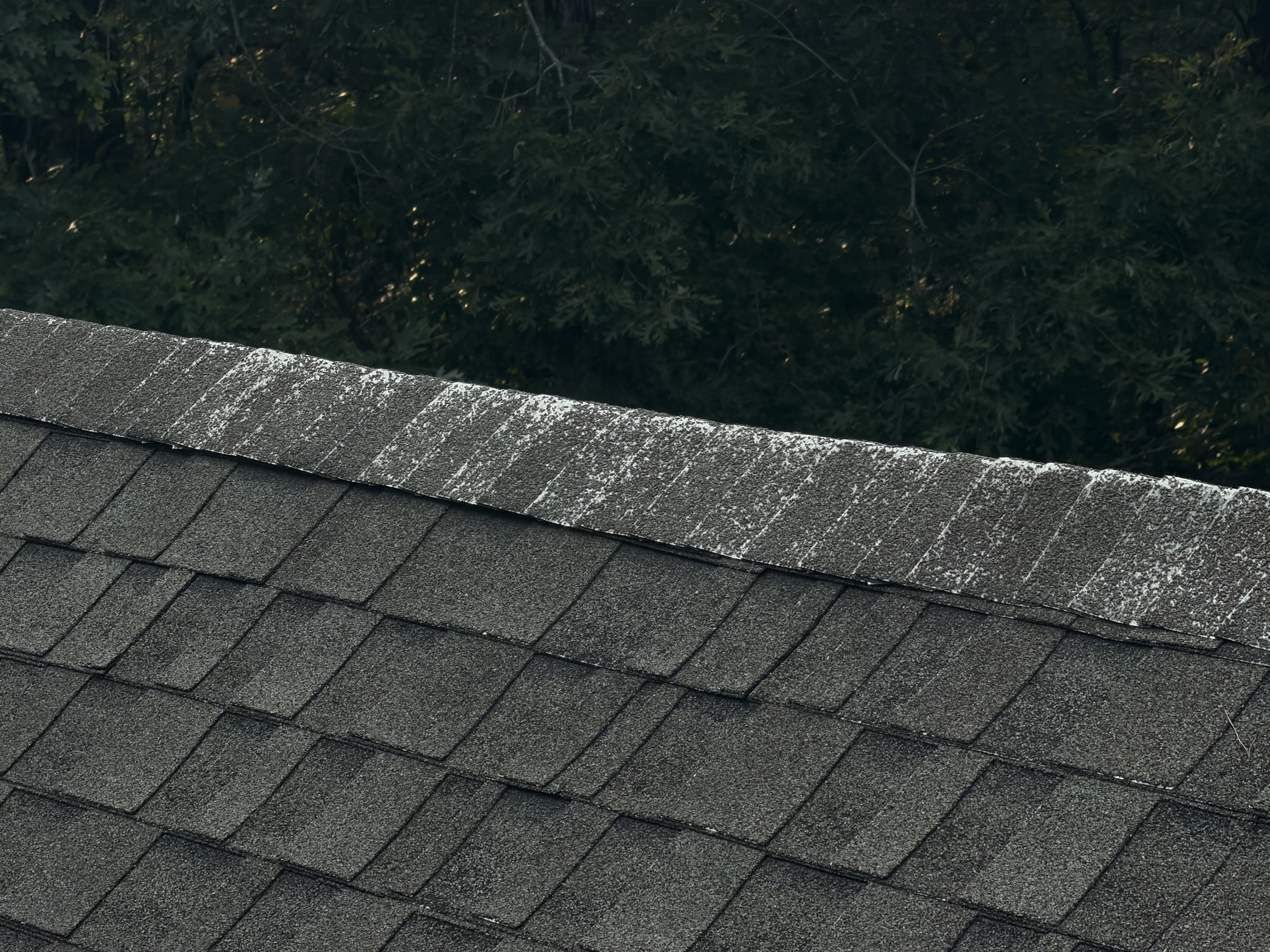
Granule loss on ridge caps — shingles like this are brittle and more likely to blow off in the next storm.
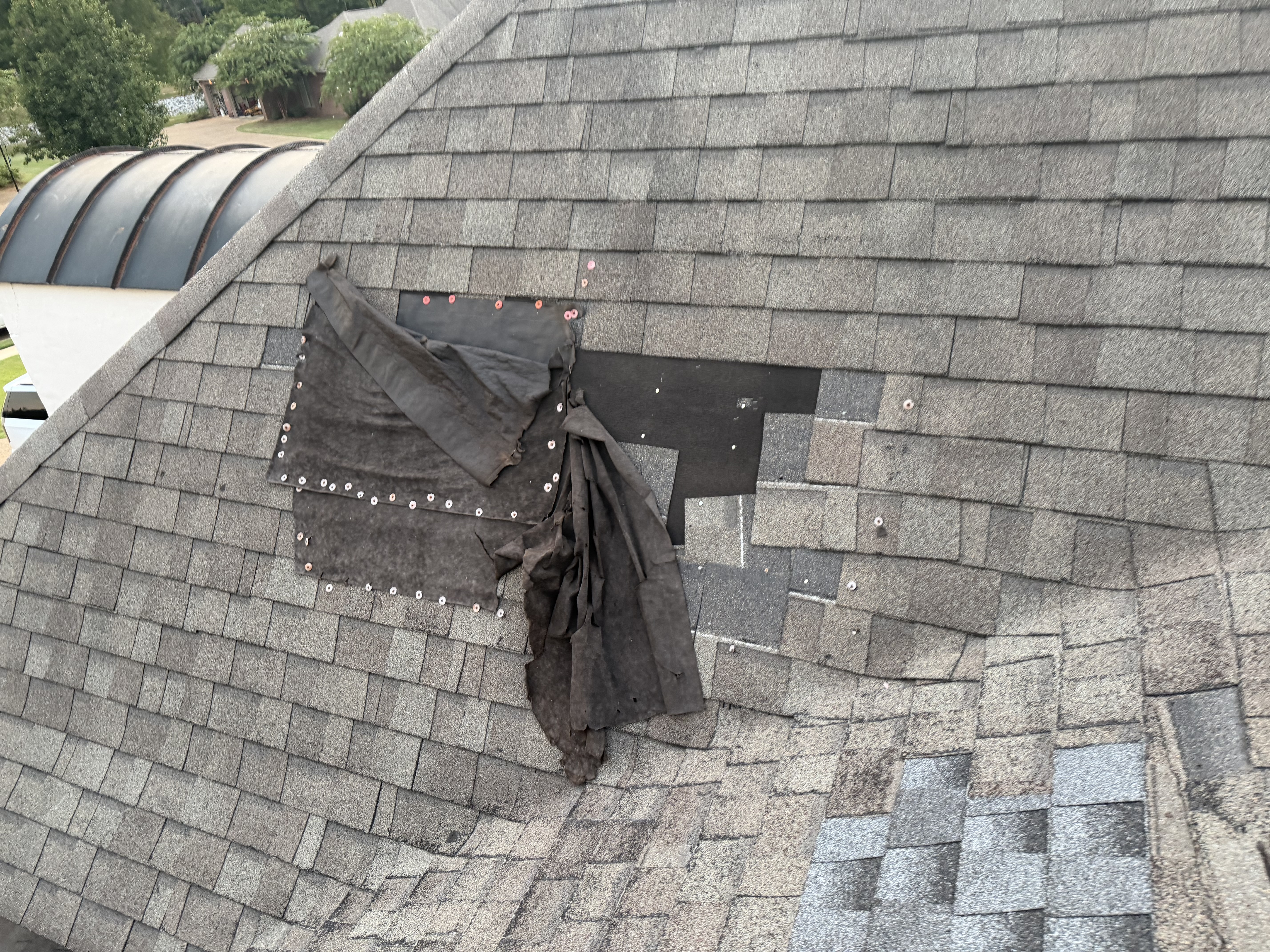
A failed patch with exposed underlayment — exactly the kind of gap that lets water in when a shingle is missing.
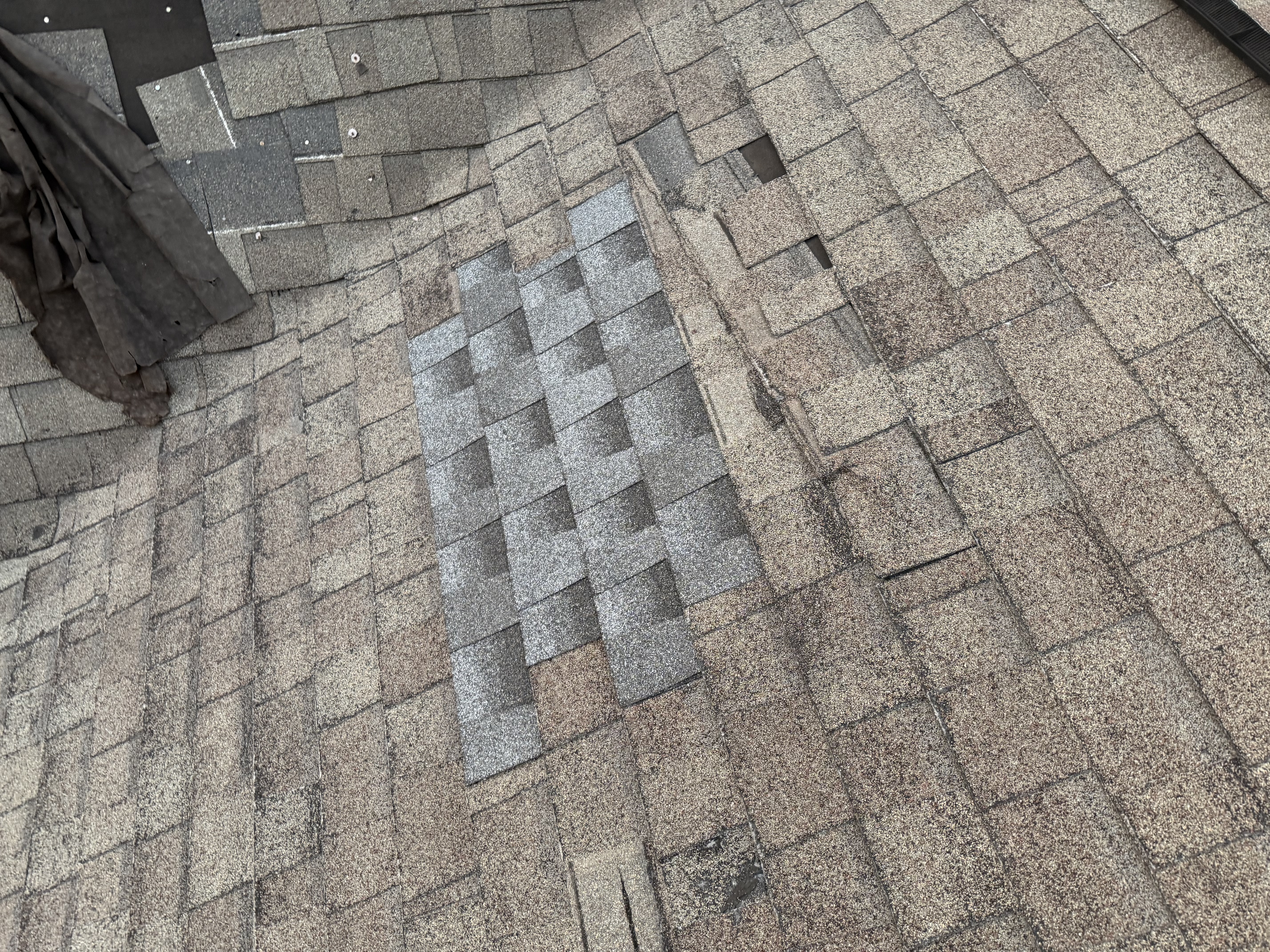
Mismatched patch shingles — a bad repair doesn't seal properly and often blows off again.
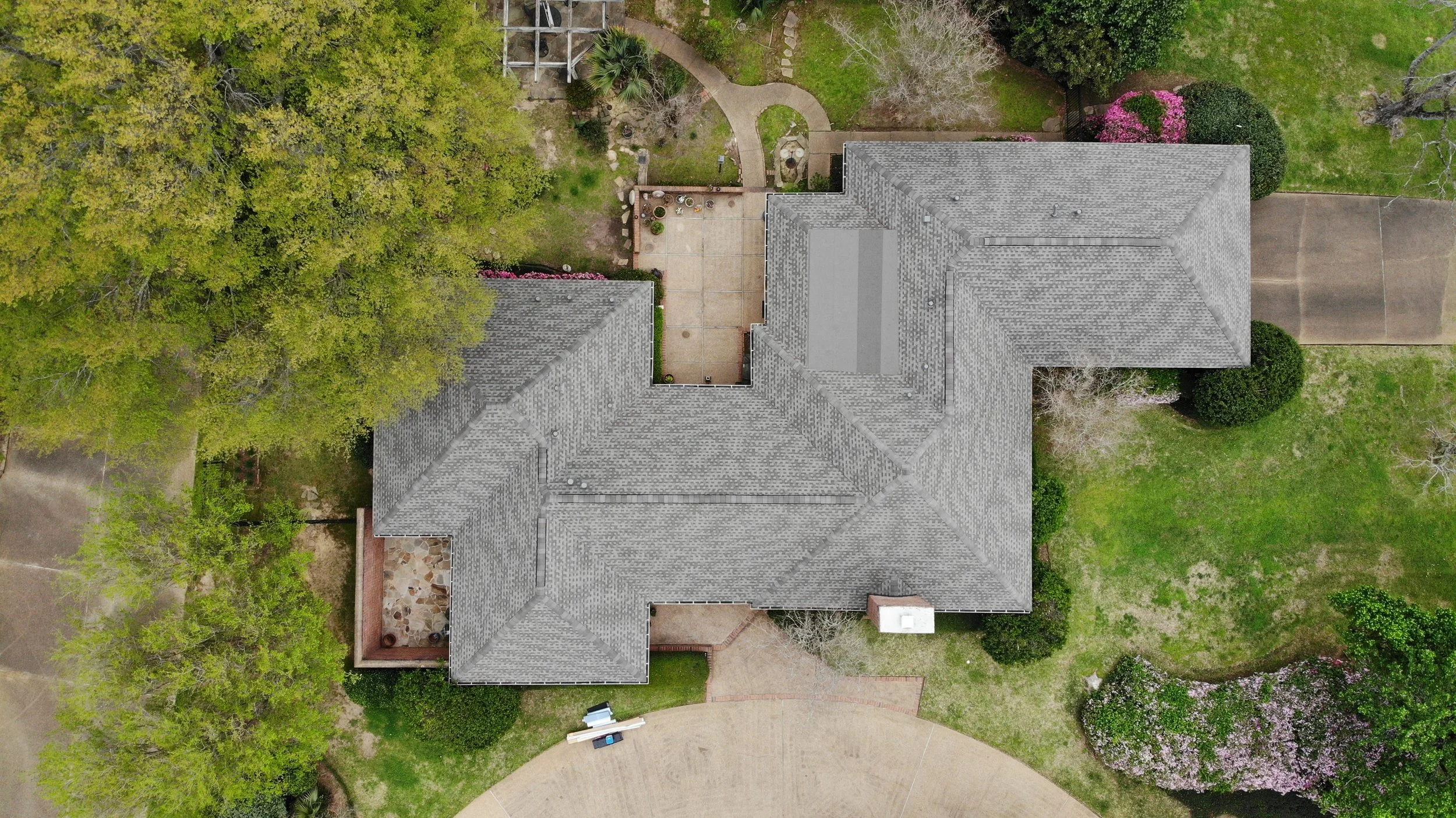
Storm damage across the Jackson metro — wind events like this are a leading cause of missing shingles.
Timing
When Should an Inspection Happen?
The sooner the exposed area is assessed, the lower the risk of water getting in. Some situations call for faster action than others.
After Any Storm with High Winds
If you know shingles blew off in a storm, schedule an inspection as soon as it's safe. The exposed underlayment is on a clock.
Before the Next Rain
If rain is in the forecast and you have missing shingles, getting them inspected and repaired before the storm is far cheaper than dealing with a leak after.
When You Find Shingles in the Yard
Even if you can't see a gap from the ground, shingles on the ground mean something came off. An inspection confirms where and how bad.
If You See a Ceiling Stain
A ceiling stain after a storm with missing shingles means water has already made it through. This needs immediate attention.
After Buying a Home
If you've recently moved in and aren't sure of the roof's history, an inspection tells you the condition and whether any shingles are at risk.
Annually for Older Roofs
Roofs over 12–15 years old benefit from a yearly look. Catching a lifted or creased shingle early prevents it from blowing off later.
Our Process
What Summit Shield Checks During the Inspection
We don't just look at the missing shingle — we look at the whole picture so the recommendation is right.
How Many Shingles Are Affected
We count the missing, lifted, and creased shingles and map where they are on the roof.
Surrounding Shingle Condition
We check the shingles around the missing ones — are they sound, or are they on their way out too?
Wind Damage Patterns
We look for creases, lifted edges, and seal failures that point to wider wind damage beyond the obvious gaps.
Exposed Areas
We assess how much underlayment or deck is exposed and how long it's been that way.
Roof Age & Condition
We consider the age of the roof and whether the shingles are still flexible enough to hold a repair.
Repairability
We determine whether a compatible shingle match is available and whether a targeted repair will hold.
Insurance Considerations
Does Insurance Cover Blown-Off Shingles?
Wind damage — including shingles blown off in a storm — is often covered by homeowners insurance, but every policy is different and we can't promise any particular outcome. Whether a claim makes sense depends on the extent of the damage, your deductible, and the cause of the loss.
We recommend having the roof inspected before you decide whether to file. We document what we find with photos, which can help if you do choose to file a claim. If the repair cost is below your deductible, a claim may not make sense; if the damage is extensive, it might. We help you understand what's on your roof so you can make that decision with real information. Want to understand how roof insurance claims work? Read our roof insurance claim guide.
Questions & Answers
Missing Shingles FAQ
Real questions from homeowners across Flowood, Jackson, and Rankin County.
Can you replace just a few missing shingles?
Yes. If the rest of the roof is in good condition and the missing shingles are an isolated problem — wind damage, a bad install, or a single defective shingle — we can replace the affected shingles and seal the repair properly. The key is matching the existing shingle style and making sure the surrounding shingles are still sound. We'll tell you honestly whether a targeted repair makes sense or whether the roof has reached the point where patching won't hold.
Does one missing shingle really need to be repaired?
Yes, and the sooner the better. A single missing shingle exposes the underlayment beneath it. The underlayment is a backup layer, not a permanent barrier — once it's exposed to sun and rain, it degrades quickly. A small, inexpensive repair now can prevent water from reaching the deck and turning into a leak inside your home. One missing shingle is a reason to repair, not a reason to ignore.
What should I do if shingles blow off my roof?
First, stay off the roof — don't try to climb up during or right after a storm. If you can see the area safely from the ground, take a photo so you have a record. Check your yard for any shingles that came down. Then call a roofing contractor to inspect the roof, assess how many shingles are affected, and determine whether the damage is isolated or part of a larger wind event. The sooner the exposed area is covered and repaired, the lower the chance of water getting in.
Will a roof leak if shingles are missing?
Not immediately, but the risk is real and increases over time. Shingles are the primary water-shedding layer. When one is missing, the underlayment below is exposed. The underlayment can shed water for a while, but it isn't designed to be a permanent roof surface — UV exposure and repeated rain break it down. A roof with missing shingles may hold for weeks or even months in dry weather, but the first heavy rain after the underlayment fails is when the leak starts.
Is a missing shingle an emergency?
A single missing shingle isn't usually an emergency the same way an active leak is, but it shouldn't be ignored. It becomes more urgent if multiple shingles are missing, if a large area is exposed, if a storm is forecast, or if you're already seeing water inside. The practical rule: the more exposed area and the more rain in the forecast, the sooner you want it inspected and repaired.
Does insurance cover blown-off shingles?
Wind damage — including shingles blown off in a storm — is often covered by homeowners insurance, but every policy is different and we can't promise any particular outcome. Whether a claim makes sense depends on the extent of the damage, your deductible, and the cause. We recommend having the roof inspected first so you know what happened and what the repair looks like before you decide whether to file. We document everything with photos, which can help if you do choose to file a claim.
Can missing shingles be repaired, or do I need a new roof?
Most missing-shingle problems are repairable. If the roof is otherwise in good shape and the missing shingles are from a specific event — a storm, a falling limb, a bad section of install — we replace the affected shingles and seal the area. Replacement becomes the better option when the roof is near the end of its life, when shingles are brittle and won't seal to a repair, or when the damage is widespread. We inspect first and recommend repair when repair is the right answer.
Do missing shingles mean I need a new roof?
Not by themselves. Missing shingles are a reason to inspect, not automatically a reason to replace. What matters is why they came off and what condition the rest of the roof is in. If a few shingles blew off in a storm but the roof is otherwise sound, a repair is usually the right call. If shingles are coming off because the roof is old, brittle, and failing across the surface, that points toward replacement. An inspection tells you which situation you're in.
What's the difference between wind-damaged shingles and shingles that blew off?
Shingles that blew off are gone — they're in your yard or on the ground, and the underlayment beneath is exposed. Wind-damaged shingles are still on the roof but have been lifted, creased, or had their adhesive seal broken. They may look fine from the ground but will fail in the next storm. Both need attention, but a shingle that's still in place can sometimes be re-secured if the surrounding shingles are sound — a shingle that's already gone needs to be replaced.
Reviews
What Homeowners Say
"Had a very professional experience with Summit Shield. The owner, Wyatt, walked me through the insurance claims process and answered every question I had — whether I was about damage to policy, Wyatt had me covered. Thank you Summit Shield!"
Bryson Davis
Ridgeland, MS
"We had storm damage and I knew it but I dreaded going through the insurance process but Wyatt handled all that and then some. Highly recommended two thumbs up!"
Jamie Kincade
Flowood, MS
"Absolutely blown away by the experience I had with this roofing company! Wyatt and Sam were incredible from start to finish. They helped me get a brand new roof at a very, very, very low cost — way more affordable than I ever expected. They were professional, honest, and made the whole process stress-free. The crew showed up on time, worked quickly, and left everything spotless. 10/10 service."
Clayton Ross
Jackson, MS
Have Missing Shingles?
Get It Inspected Before It Becomes a Leak
A few missing shingles are usually a simple repair — but only if they're caught before water gets in. We'll get on the roof, count what's affected, check the surrounding shingles, and show you exactly what needs to happen. No pressure, no upsell.
Not sure if you need a repair or a full replacement? Read our "Do I Need a New Roof?" guide.