

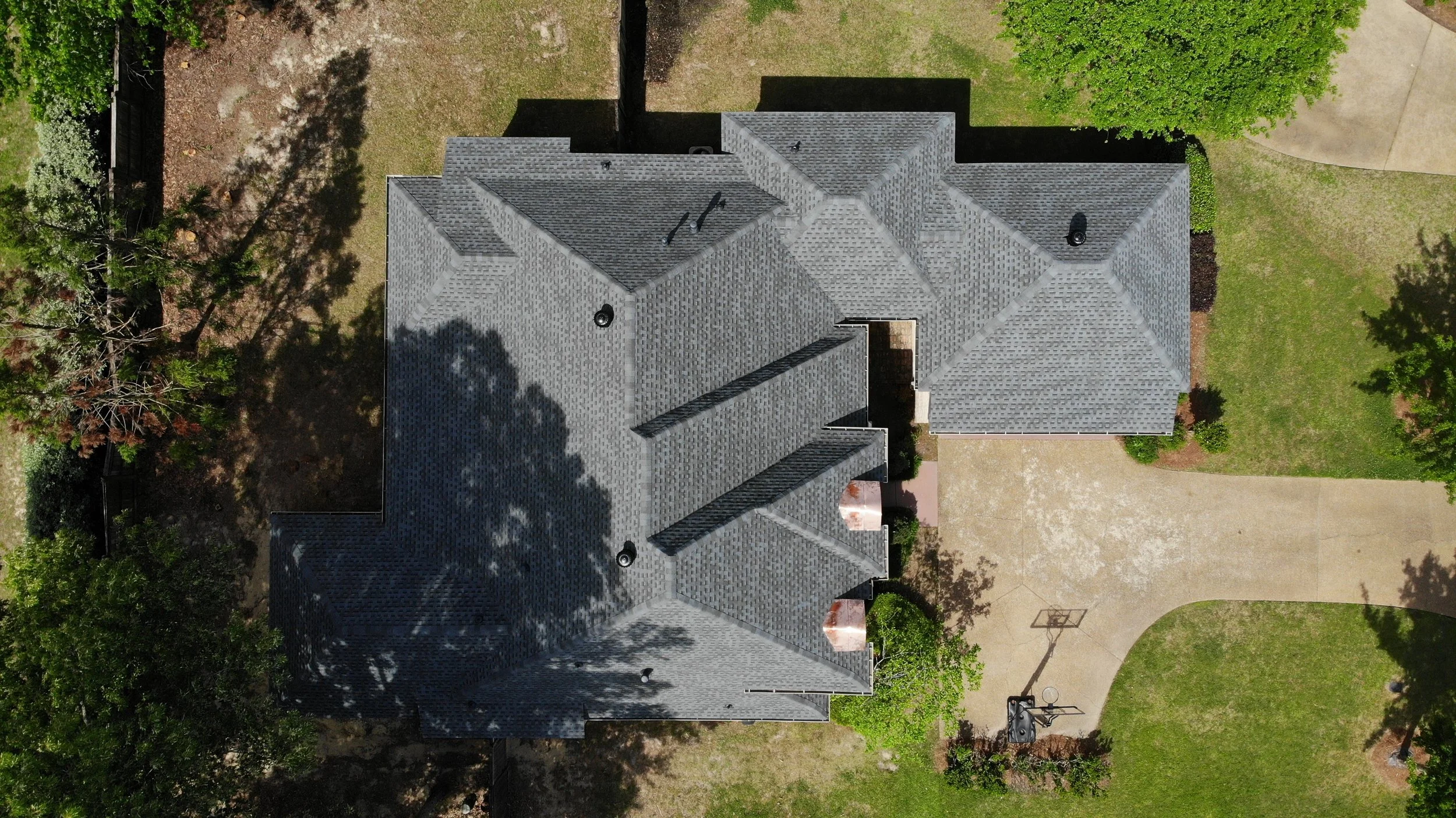
Summit Shield Roofing
Roof Leak Repair in Jackson & Flowood, MS
A leak doesn't automatically mean you need a new roof. We find where the water is actually entering, document the cause with photos, and recommend the right repair — not a replacement you don't need.
✓ Most leaks are repairable for a fraction of replacement cost.
Not sure where the water is coming from? Start with a roof inspection.
Start Here
A roof leak does not mean you need a new roof
A lot of homeowners panic when they see water on the ceiling — they assume the whole roof has failed. In most cases, it hasn't. The vast majority of leaks we see are isolated problems: a cracked pipe boot, a section of failed flashing, a handful of damaged shingles, or a valley with debris buildup.
The job is to find where the water is actually entering and fix that — not to sell you a roof you don't need. We diagnose the leak, document it with photos, and recommend the appropriate repair. If replacement is genuinely justified, we'll show you why. If it isn't, we'll tell you that too.
What a leak inspection gives you
First Steps
What to Do When Your Roof Starts Leaking
A few quick steps can limit the damage while you wait for an inspection.
Protect Your Home
Move furniture, electronics, and anything that water can damage out of the area. Place a bucket or towel under the drip.
Contain the Water
If water is spreading across the ceiling, a small hole in the stained area can let it drain into a bucket instead of spreading.
Don't Climb in a Storm
Don't get on the roof during rain or high winds. If you can safely access the attic, look for where the water is entering.
Call for an Inspection
The sooner the source is found and documented, the less damage water can do. We respond same or next day for active leaks.
Active Leak?
Urgent Roof Leak? Here's What We Can Do
Have an active roof leak? Contact Summit Shield anytime — we serve homeowners across Flowood, Jackson, and the Jackson metro. We'll help you understand the immediate next steps and arrange an inspection as quickly as possible.
When we arrive, we find where the water is entering, document it with photos, and fix it right — so the leak stops and doesn't come back. For storm-related leaks, we photograph everything your insurance carrier will need.
What to expect when you call
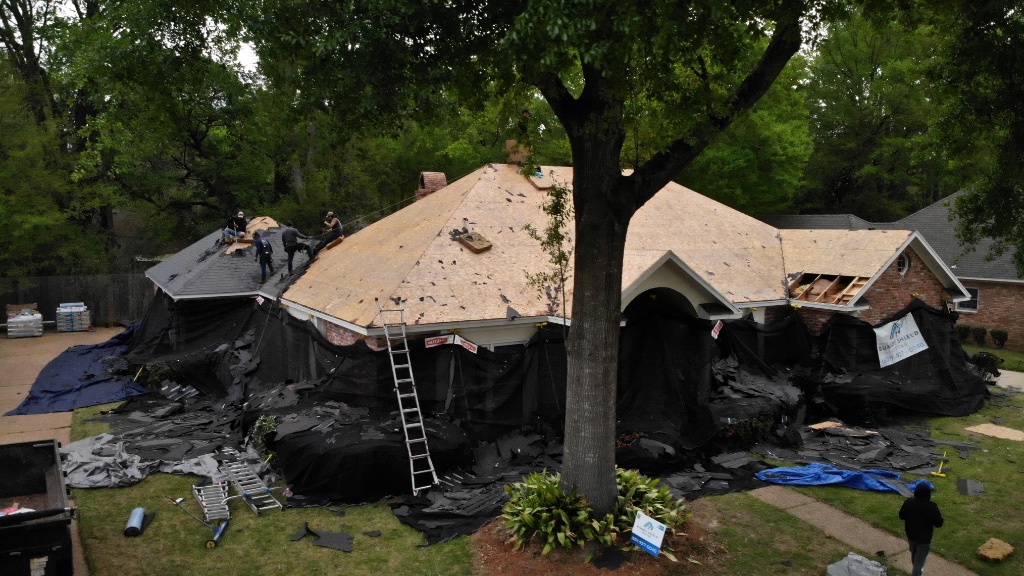
Ceiling Stains
Does a Ceiling Stain Always Mean the Roof Is Leaking?
Not always. A brown or yellow stain on your ceiling can come from a roof leak — but it can also come from a plumbing leak above, condensation on an HVAC duct in the attic, or moisture that's built up from poor attic ventilation.
The stain tells you water is getting in somewhere. It doesn't tell you where. We trace the water back to its actual source — on the roof, in the attic, or elsewhere — so you fix the right thing the first time. Repairing the roof when the problem is a plumbing leak won't stop the stain.
Not sure where it's coming from? Get an inspectionCommon sources of a ceiling stain
Roof leak
Water enters through a failed component — flashing, vent boot, damaged shingle — and runs down the deck to the ceiling.
Plumbing leak
A pipe, supply line, or drain above the stain is leaking. No roof repair will fix this.
HVAC condensation
Moisture condenses on AC ducts or the drip pan in the attic and drips onto the ceiling below.
Attic moisture
Poor ventilation traps humidity in the attic, which can cause staining on the ceiling below over time.
Heavy-Rain-Only Leaks
These are some of the most common leaks we find — and they're almost always repairable once the entry point is located.
Heavy Rain Leaks
Why Does a Roof Leak Only During Heavy Rain?
Leaks that only show up during heavy rain are usually caused by water being driven sideways by wind or by a component that only fails under volume. Light rain may not reach the failed area, but a downpour pushes water past the seal — and into your home.
These leaks are frustrating because the roof looks fine most of the time, but they're very repairable. The key is finding the exact entry point, which often means getting on the roof and inspecting the flashing, valleys, and penetrations in the area above the stain.
Where Leaks Happen
Common Roof Leak Locations
Most leaks come from the same handful of places. Here's where we look first when water is getting in.
Flashing
Chimney, skylight, wall, and step flashing — the most common source of roof leaks. When flashing pulls loose or the seal fails, water runs behind it and into the home.
Vents & Penetrations
Plumbing vent boots, exhaust vents, and any pipe that passes through the roof. The rubber boot cracks over time and lets water run straight in around the pipe.
Valleys
Where two roof slopes meet. Debris builds up, shingles wear faster, and water concentrates — making valleys a frequent leak point, especially on older roofs.
Damaged Shingles
Wind-lifted, cracked, or missing shingles expose the underlayment below. Once that fails, water reaches the deck and enters the home.
Chimney Area
Chimney flashing, cricket, and mortar joints are all common leak sources. Water that enters around a chimney often shows up as a stain on the ceiling near an interior wall.
Skylights
Skylight seals and curb flashing degrade over time. A leak here can look like a roof problem but may be a flashing or seal issue at the skylight itself.
Water running behind your gutters or rotten fascia can also look like a roof leak. See our gutter, fascia & soffit work →
Repair vs. Replace
Can a Roof Leak Usually Be Repaired?
Yes — most leaks are repairable. A cracked pipe boot, a section of failed flashing, or a few damaged shingles are isolated problems with targeted fixes. We replace the failed component, seal it properly, and stop the leak — without touching the rest of the roof.
A leak becomes a reason to consider replacement when the roof is near the end of its useful life and the leak is a symptom of widespread wear, not an isolated failure. We'll show you the photos and give you a straight answer about which makes sense for your situation.
What usually means repair
What may mean replacement
Real Leak Sources
What Roof Leaks Actually Look Like
Real conditions we've documented on roofs across the Jackson metro — the kind of damage you'd never see from the ground, but that lets water straight into your home.
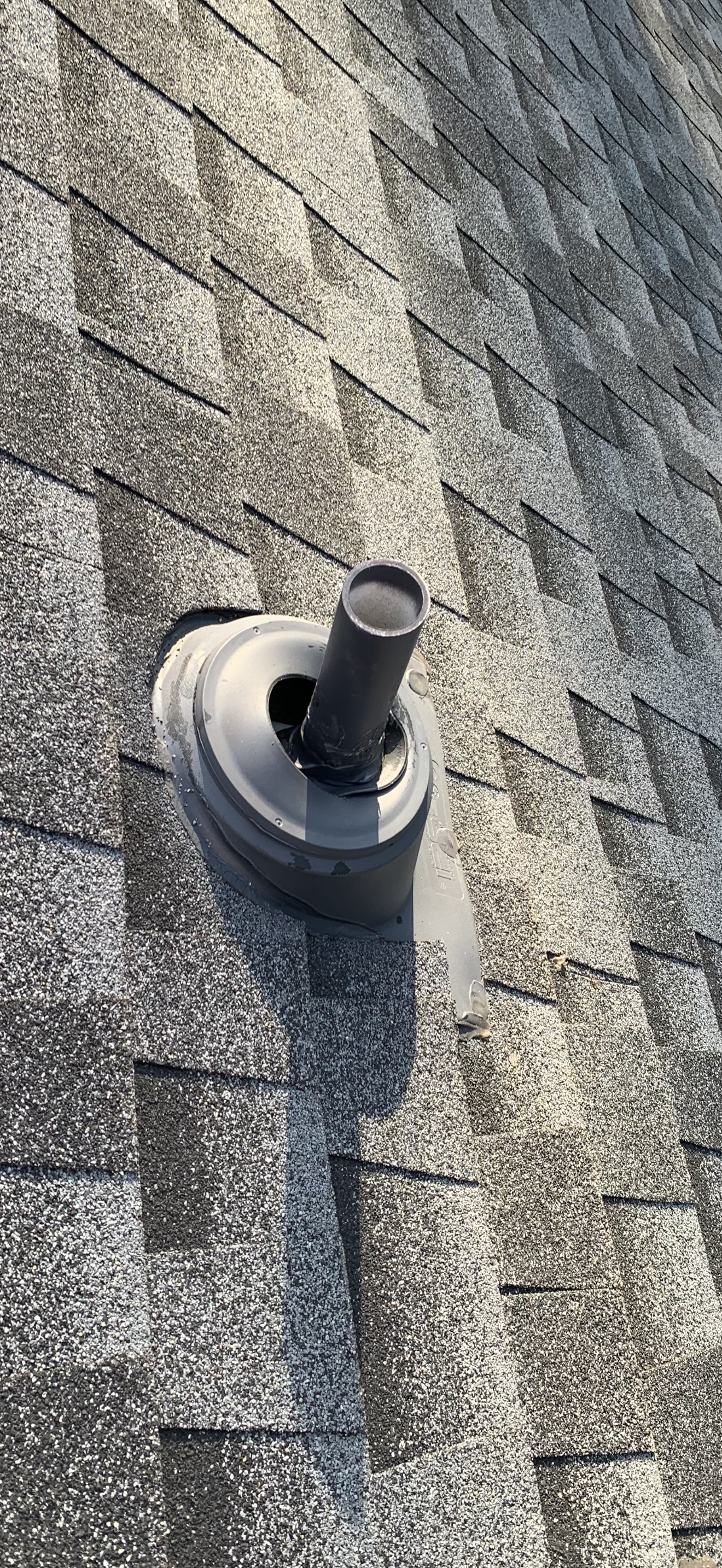
Cracked plumbing vent boot — one of the most common roof leaks we find. Water runs straight in around the pipe.
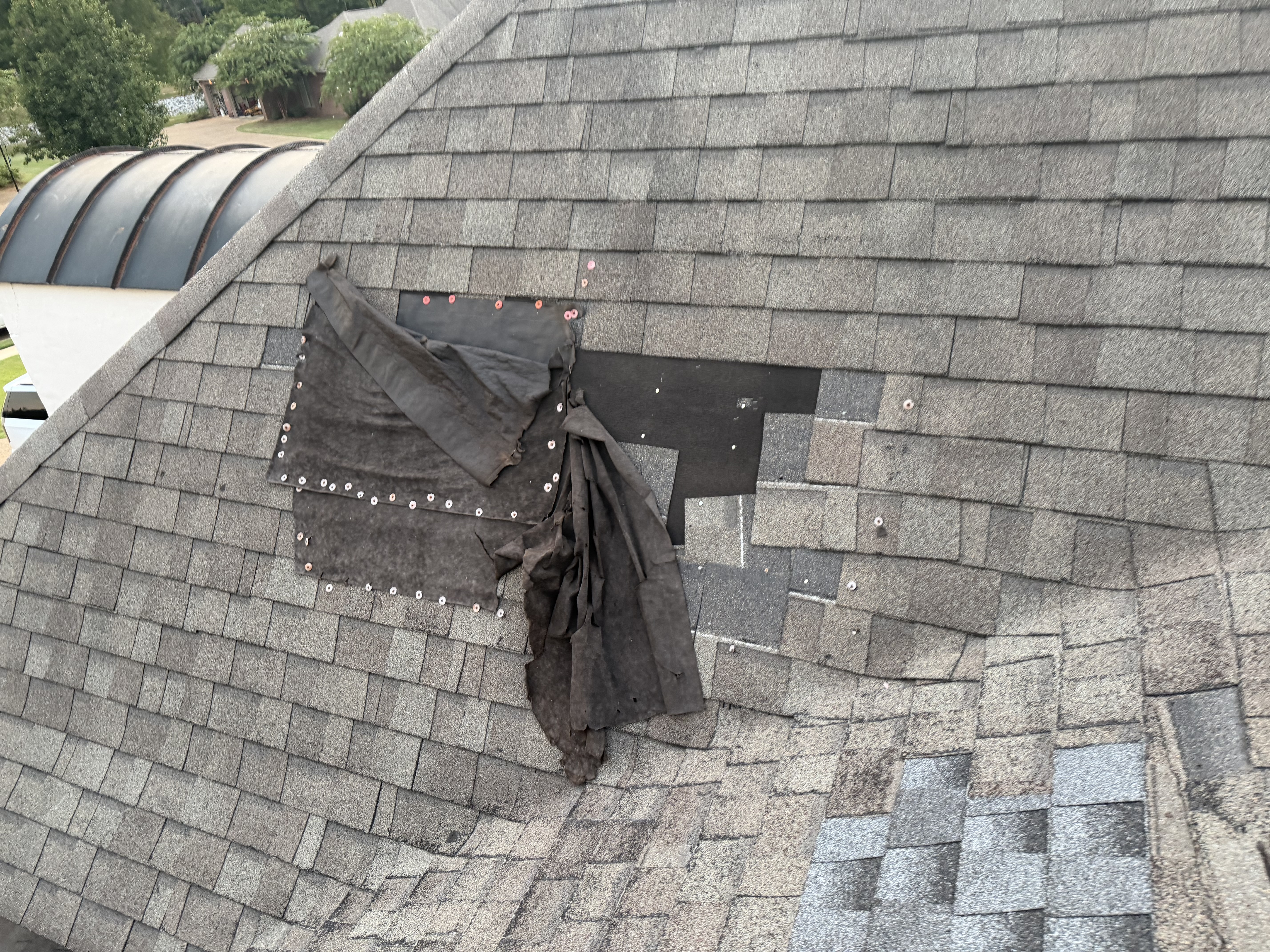
A failed patch — underlayment peeling back and exposed fasteners. This is why proper repairs matter.
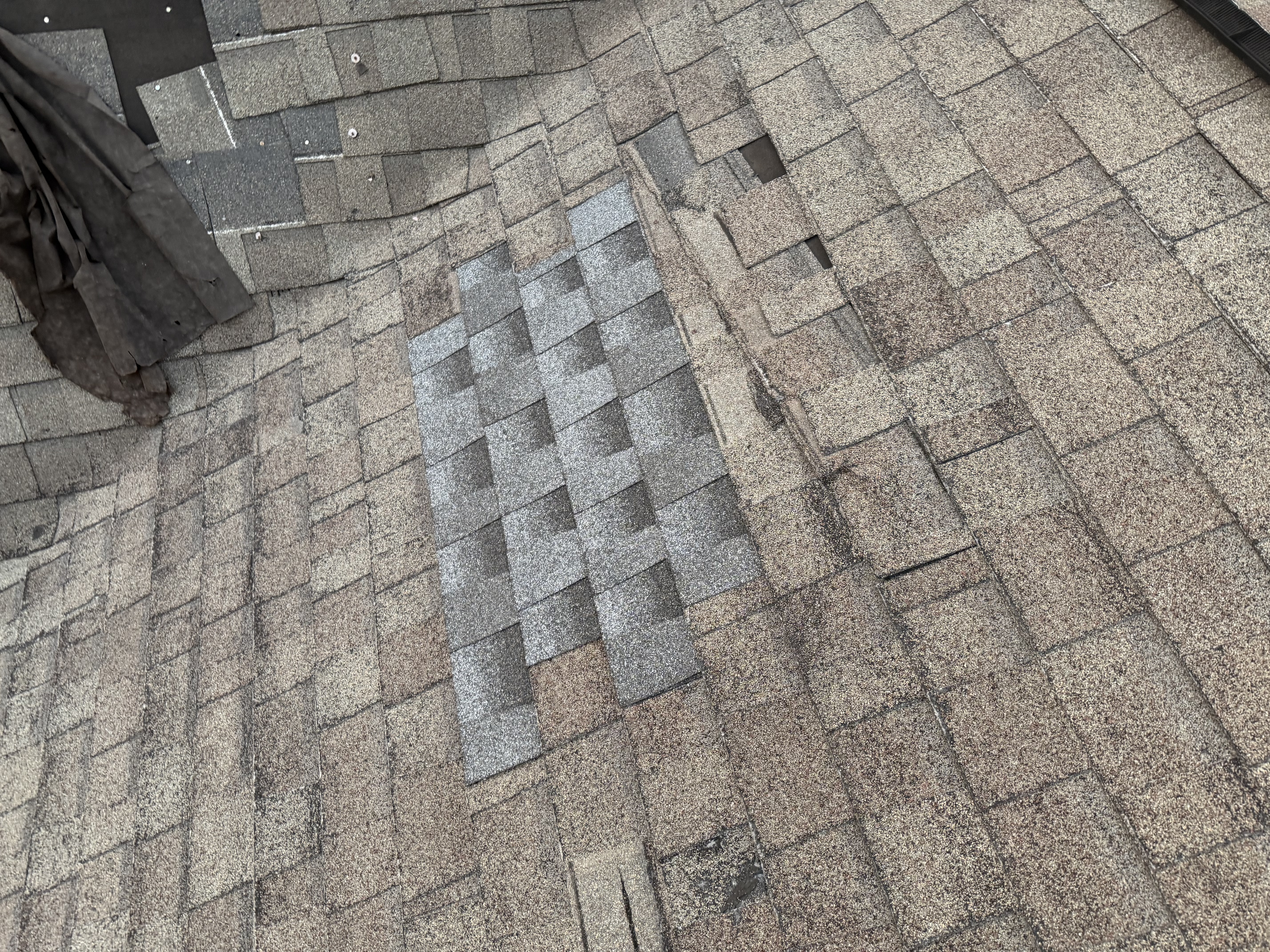
Mismatched patch shingles in a valley — valleys concentrate water, so a bad repair here leaks again fast.
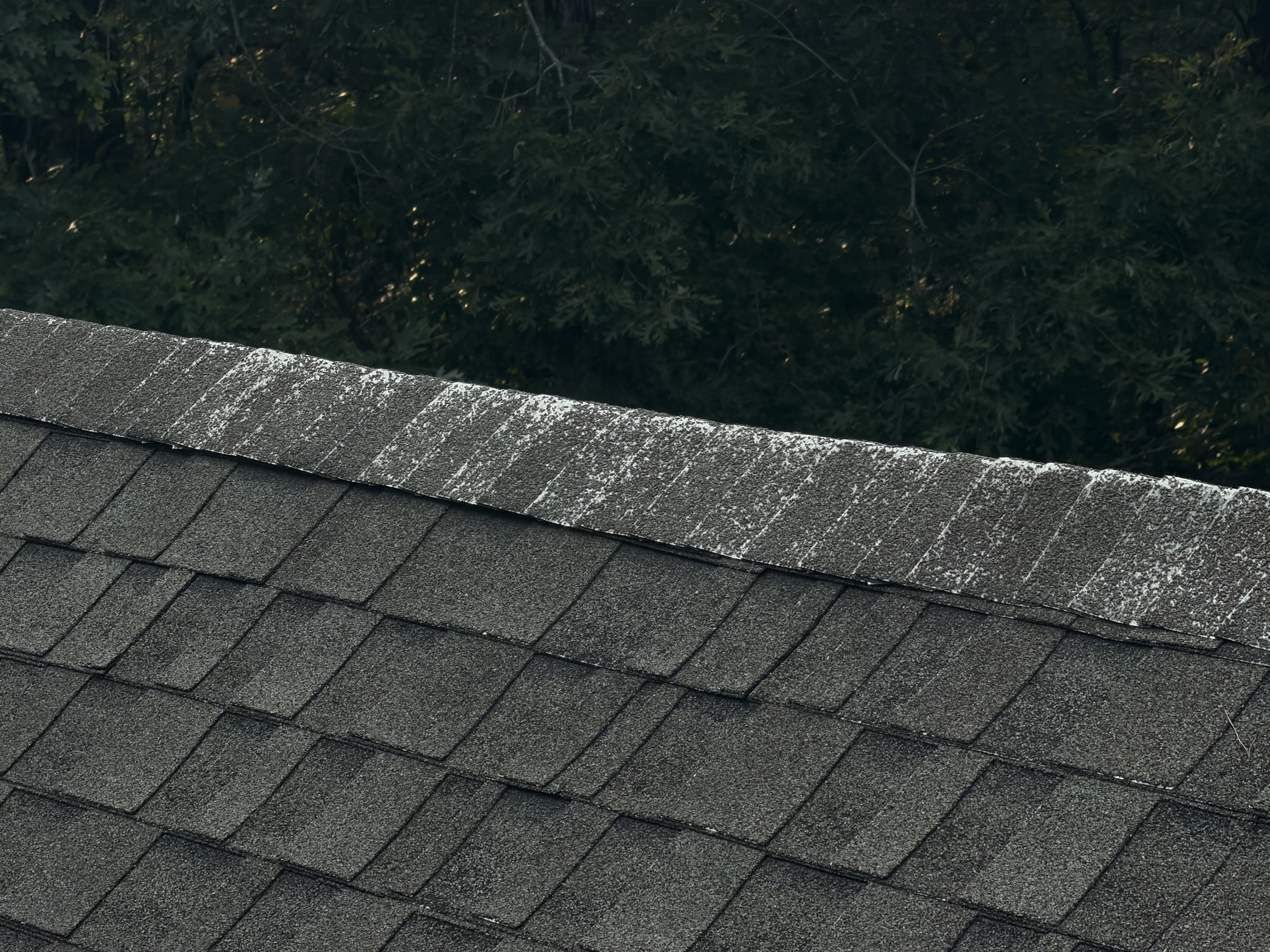
Heavy granule loss on ridge caps — an aging roof like this leaks in places that look fine from the ground.
Our Process
What Happens During a Leak Inspection
We don't guess where the water is coming from — we find it, photograph it, and show you.
We Get on the Roof
We inspect the area above the leak and the full roof system around it — shingles, flashing, vents, valleys, and penetrations.
We Check the Attic
When access allows, we look in the attic for water trails, wet insulation, and daylight — the signs that point to the actual entry point.
We Photograph Everything
We document the damage and the cause with photos so you can see exactly what we see and understand what's happening.
We Explain & Recommend
We sit down with you, show you the photos, and recommend the right repair — or tell you if the leak isn't the roof at all.
Insurance & Leaks
Should I Call Insurance for a Roof Leak?
It depends on what caused the leak. If the leak is from sudden storm damage — hail, wind, or a fallen limb — and the repair cost exceeds your deductible, a claim may make sense. If the leak is from age, wear, or a maintenance issue, your policy likely won't cover it.
We recommend having the roof inspected before you call your insurance company. We document what we find and help you understand whether the damage is the type insurance typically covers — before a claim is filed and recorded on your policy history. We can't promise any particular insurance outcome, but we can make sure you know what's on your roof before you decide. Want to understand how roof insurance claims work? Read our roof insurance claim guide.
Questions & Answers
Roof Leak FAQ
Real questions from homeowners across Flowood, Jackson, and Rankin County.
What should I do when my roof starts leaking?
First, move anything that could be damaged by water out of the area and place a bucket or towel under the drip. If you can safely access the attic, look for where the water is entering and trace it back toward the roof. Then call a roofing contractor to inspect the roof and identify the source. A leak rarely fixes itself — the longer water travels into your home, the more expensive the damage becomes.
Does a ceiling stain always mean the roof is leaking?
Not always. A brown or yellow stain on your ceiling can come from a roof leak, but it can also come from a plumbing leak, condensation on HVAC ducts, or moisture in the attic. The way to know for sure is to have the roof and attic inspected. We trace the water back to its actual source rather than assuming it's the roof — because repairing the wrong thing won't stop the stain.
Why does my roof leak only during heavy rain?
Leaks that only appear during heavy rain are usually caused by water being driven sideways by wind or by a component that only fails under volume — like a valley that can't keep up, flashing that's pulled loose, or a penetration where the seal has failed. Light rain may not reach the failed area, but a downpour does. These leaks are very repairable once the entry point is found.
Can a roof leak usually be repaired?
Yes — most roof leaks are repairable without replacing the entire roof. The most common leaks we see — cracked pipe boots, failed flashing, a handful of damaged shingles, a valley with debris buildup — are isolated problems. We find the entry point, fix that area, and seal it properly. A leak is a reason to inspect, not automatically a reason to replace.
When does a leak indicate larger roof damage?
A leak may point to bigger problems if the roof is near or past its useful life, if the deck underneath is soft or rotted, if there are multiple leaks in different areas, or if shingles are widespread and brittle. In those cases, patching one leak often leads to another within months. We'll show you the photos and tell you honestly whether repair makes sense or whether the roof has reached the point where replacement is the better investment.
Should I call my insurance company for a roof leak?
It depends on the cause. If the leak is from sudden storm damage — hail, wind, or a fallen limb — and the repair cost exceeds your deductible, a claim may make sense. If the leak is from age, wear, or a maintenance issue, your policy likely won't cover it. We recommend having the roof inspected first so you know what caused the leak and whether it's the type of damage insurance typically covers — before a claim is filed and recorded on your policy history.
What happens during Summit Shield's leak inspection?
We get on the roof and inspect the area above the leak, plus the full roof system around it — shingles, flashing, vents, valleys, and penetrations. We photograph everything we find and look in the attic for signs of where water is entering. Then we sit down with you, show you the photos, explain what's causing the leak, and recommend the right repair. If the leak turns out not to be the roof, we tell you that too.
I have an urgent roof leak — how fast can you come out?
For active leaks, we respond same or next day to inspect and stop the water. The sooner the source is found and documented, the less damage water can do. Call (601) 414-9824 and tell us you have an active leak — we prioritize those. We can also walk you through immediate steps to protect your home while you wait for the inspection.
Do you offer emergency roof leak repair?
You can reach Summit Shield anytime, and we'll help you understand the immediate next steps and arrange an inspection as quickly as possible. For most homeowners, a prompt inspection and targeted repair is what actually solves the problem. If your leak is storm-related, we document the damage for your insurance carrier as part of the repair process.
Reviews
What Homeowners Say
"Absolutely blown away by the experience I had with this roofing company! Wyatt and Sam were incredible from start to finish. They helped me get a brand new roof at a very, very, very low cost — way more affordable than I ever expected. They were professional, honest, and made the whole process stress-free. The crew showed up on time, worked quickly, and left everything spotless. 10/10 service."
Clayton Ross
Jackson, MS
"We had storm damage and I knew it but I dreaded going through the insurance process but Wyatt handled all that and then some. Highly recommended two thumbs up!"
Jamie Kincade
Flowood, MS
"Great customer service, and excellent work. Mr. Wyatt made sure that all the details of the work are taken care of in the best way. He is very accessible, always available to answer any questions and tireless effort with the insurance company following up on the claim. Highly recommend."
Ashraf A
Madison, MS
Have a Leak?
Find the Source. Fix It Right.
Water on your ceiling is a problem — but it doesn't always mean a new roof. We'll get on the roof, find where the water is entering, and show you exactly what needs to be fixed. No pressure, no upsell.
Not sure if you need a repair or a full replacement? Read our "Do I Need a New Roof?" guide.